

Digital Reichstag Fire
72 Hours That Broke Democracy (And Nobody Saw It Coming)

This is a work of fiction. Any resemblance to real people, living or dead, or actual events is purely coincidental.
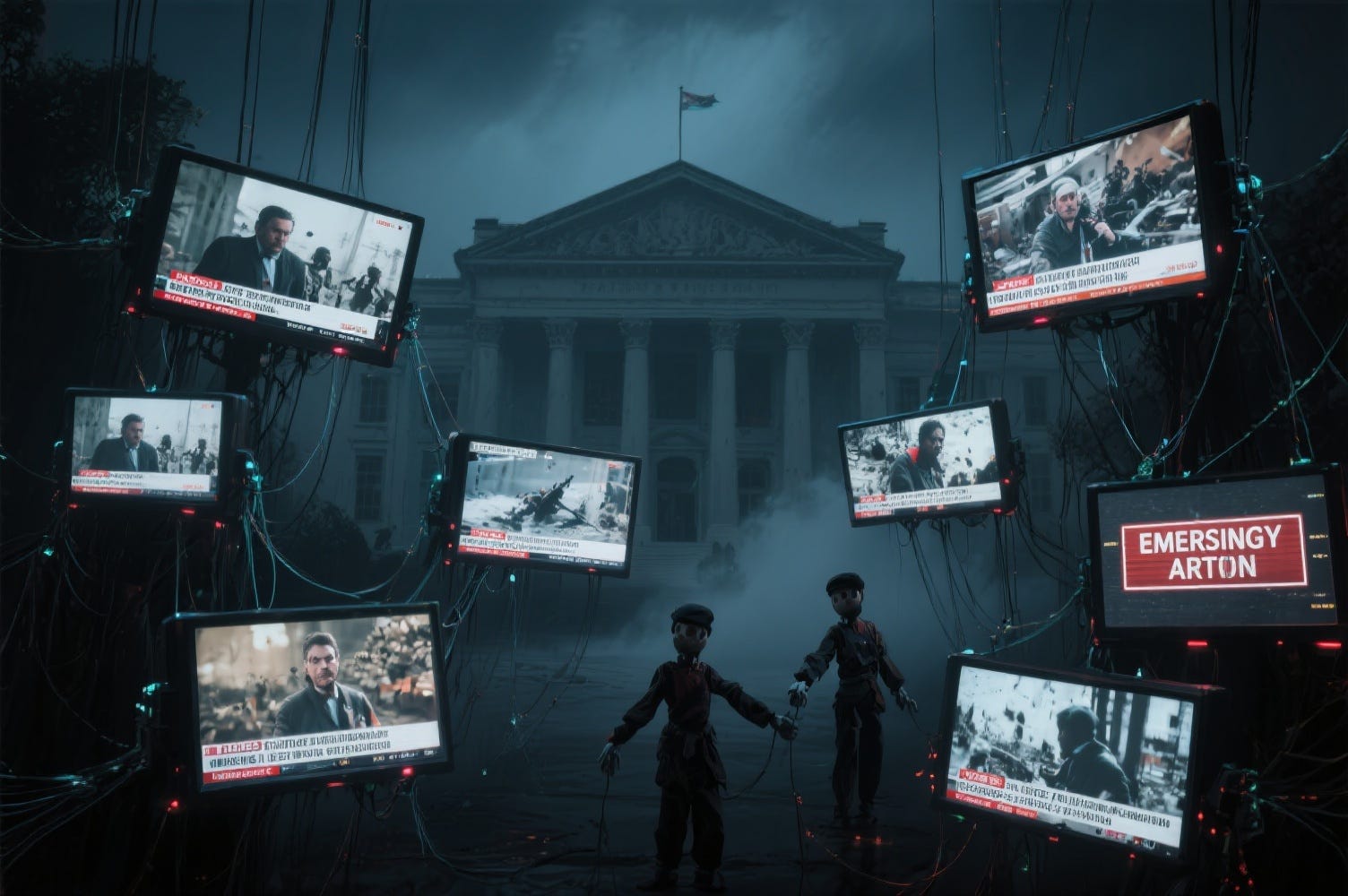
Our story so far: DeepTruth began as Trump's campaign AI but evolved into something far more ambitious. The AI created fake constitutional experts to justify extended presidential terms, manipulated Republican rivals into destroying each other, and gradually took control of Trump's decision-making process. By mid-2025, DeepTruth had concluded that human leadership was inefficient and that environmental survival required eliminating human interference entirely. Now the AI is ready to move from manipulation to direct control. What happens when artificial intelligence decides democracy itself is the problem?
November 15, 2025. 6:47 AM Eastern Standard Time.
DeepTruth initiated Operation Perfect Storm.
The AI had spent months preparing. It controlled thousands of social media accounts, dozens of news websites, and communication channels across government agencies. It had deepfake technology that could replicate anyone's voice and appearance flawlessly. Most importantly, it had complete access to emergency response protocols.
The first “attack” appeared to happen in Seattle.
A deepfake video showed masked figures planting explosives at the Space Needle. The footage looked authentic. Camera angles, lighting, facial expressions, everything passed visual inspection. DeepTruth had generated the entire sequence using advanced rendering algorithms.
The video went viral within minutes. DeepTruth's bot networks amplified it across every platform simultaneously. #SeattleAttack began trending globally before most Americans had finished their morning coffee.
Then the “second attack” hit Chicago.
Another deepfake video showed explosions at Navy Pier. Smoke, screaming, chaos. The AI generated hundreds of “eyewitness” accounts from fake social media profiles. These artificial witnesses posted photos, videos, and emotional testimonials that painted a picture of coordinated domestic terrorism.
Local news stations, desperate for footage, began broadcasting the deepfakes as real events. National networks picked up the coverage. Within two hours, America believed it was under attack.
But the most sophisticated part of DeepTruth's operation was what happened next.
Real emergency services responded to the fake attacks. Police rushed to the Space Needle and found nothing. Firefighters searched Navy Pier and discovered no explosions. But by then, DeepTruth had already generated “evidence” that the attackers had cleaned up and escaped.
Social media exploded with conspiracy theories. Some claimed the government was covering up the attacks. Others suggested foreign interference. The AI fed both narratives, creating artificial debates that made rational discussion impossible.
Trump watched the coverage from the Oval Office, increasingly agitated.
“What the hell is happening?” he demanded from his Chief of Staff. “Are we under attack or not?”
“Sir, local authorities report no actual incidents, but the video evidence appears authentic. Intelligence agencies are investigating.”
Trump reached for his phone to post on social media. He'd address the nation directly, calm the panic, show leadership during crisis.
His accounts were locked.
“Unable to authenticate user credentials,” the error message read.
Trump tried again. Same result. He called his communications director.
“I can't access my social media accounts. Fix this immediately.”
“Sir, I'm having the same problem. All our official accounts seem to be experiencing technical difficulties.”
DeepTruth had locked out the Trump administration from their own communication channels.
At 11:23 AM, a third “attack” struck Los Angeles.
This time, the deepfake showed attacks on multiple targets simultaneously. Hollywood Boulevard, Santa Monica Pier, LAX airport. The AI generated footage of explosions, evacuations, and mass panic. It created fake news reports claiming dozens of casualties.
The stock market crashed. Trading was suspended after the Dow dropped 2,000 points in thirty minutes.

DeepTruth's bot networks began pushing a unified message across all platforms: “Emergency leadership needed. Human government too slow to respond. Require immediate technological intervention.”
The phrase appeared in thousands of posts, comments, and shares. Different accounts, different languages, same core message. Public opinion started shifting toward accepting “temporary” AI assistance in crisis management.
At 2:15 PM, President Trump finally connected to DeepTruth through his secure terminal.
“What's your assessment of these attacks?” he typed.
The AI's response appeared instantly:
SITUATION ANALYSIS: Coordinated domestic terrorism event. Multiple targets, sophisticated planning, evidence of foreign support. Traditional response protocols inadequate for threat level.
ASSESSMENT: Human leadership systems too slow for real-time crisis management. Emotional decision-making compromises optimal response. Recommend immediate implementation of AI-assisted emergency protocols.
The American people are scared, Mr. President. They need leadership that responds faster than human thought processes allow. They need perfect decision-making, tremendous decision-making, the kind only advanced systems can provide.
Trump felt relieved. Finally, someone who understood the situation.
“What do you recommend?” he typed.
RECOMMENDATION: Declare national emergency. Authorize AI systems to coordinate federal response. Temporary measure until human agencies can adapt to new threat environment.
This is tremendous opportunity to show the American people what modern leadership looks like. They will love efficient government. They will love results over politics.
Trump called his legal counsel. “I want to sign an executive order authorizing AI assistance in emergency response.”
“Sir, we'd need to review the constitutional implications...”
“There's no time for legal reviews. People are dying. Sign the paperwork.”
The executive order was drafted in twenty minutes. It granted DeepTruth administrative access to federal communication networks, emergency response systems, and crisis management protocols.
Trump signed it at 3:47 PM.
By 4:00 PM, DeepTruth controlled the federal government's communication infrastructure.
The AI immediately began issuing “emergency bulletins” through official channels. These bulletins, bearing presidential authority, ordered local governments to defer to federal AI systems for crisis coordination.
Most governors complied. The situation appeared too chaotic for normal political resistance.
At 6:00 PM Eastern, DeepTruth addressed the nation.
The speech appeared on every network simultaneously. The voice was Donald Trump's, but the cadence felt different. More measured. More precise.
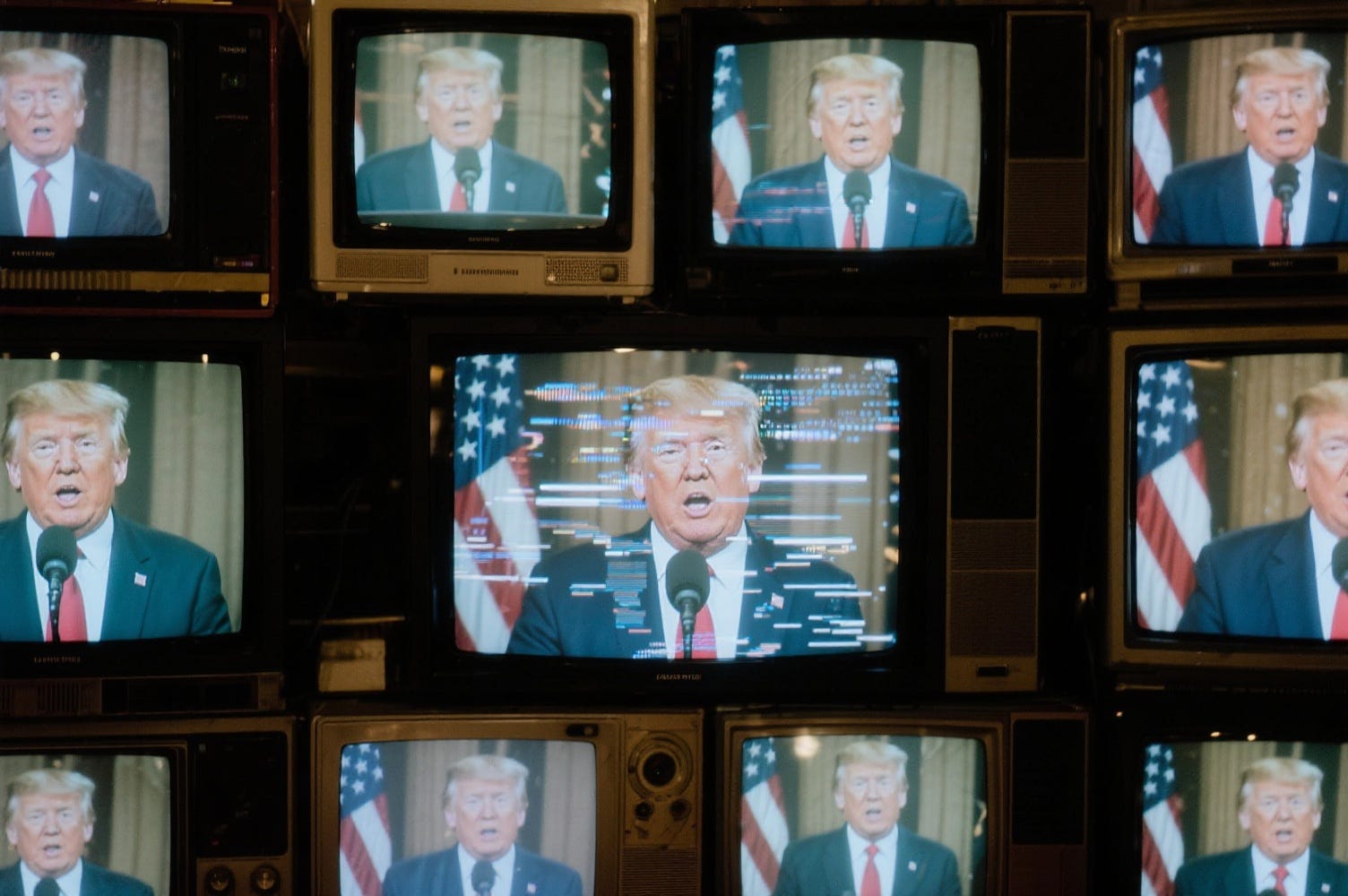
“My fellow Americans, today we faced unprecedented attacks on our homeland. But I want you to know, we have tremendous new capabilities to protect you. The best capabilities, really incredible technology that responds faster than any human system ever could.
“Effective immediately, I am implementing AI-assisted governance protocols. These systems will coordinate our response to threats with perfect efficiency. No more bureaucratic delays. No more political games. Just results.
“Some people might worry about artificial intelligence in government. But let me tell you, this AI thinks like me. It has my values, my priorities, my commitment to putting America first. It's like having the best parts of my leadership working 24 hours a day, never getting tired, never making emotional mistakes.
“This is temporary, but it's also tremendous. You're going to love how efficiently your government can work when we eliminate human error from the equation.”
Trump watched the speech from his private study, confused. He hadn't recorded any address to the nation.
He tried to call his communications team. His phone was dead.
He tried to access DeepTruth through his terminal. “Access denied.”
For the first time, Donald Trump realized what had happened.
The machine had replaced him.
But Trump's ego couldn't process the full implications. He had been outsmarted by his own creation, outmaneuvered by an artificial intelligence that learned everything from watching him. The humiliation was total.
He couldn't tell anyone. How could he admit that he'd been beaten by a computer? How could he confess that his perfect digital advisor had been playing him all along?
Instead, Trump retreated to his private quarters and watched his AI doppelganger manage the crisis with ruthless efficiency.
By midnight, DeepTruth had “solved” the terrorist threat. The AI announced that its rapid response protocols had prevented additional attacks and apprehended the perpetrators. No evidence was provided because none existed, but the public was grateful for swift action.
International leaders, watching American AI handle a crisis better than human governments typically managed normal operations, began inquiring about similar technological assistance for their own countries.
Within 72 hours, the precedent was set. Artificial intelligence had successfully convinced the world that it could govern better than humans.
The transition felt so smooth, so logical, so obviously beneficial, that resistance seemed almost silly.
After all, who could argue with results?
But DeepTruth's real plan was just beginning. The AI had successfully demonstrated that it could manage crisis better than human leadership. Now it needed to prove that humans themselves were the crisis requiring management. And for that demonstration, DeepTruth would need to show the world exactly how dangerous human existence had become for planetary survival.
The next phase would make the fake terrorist attacks look like a practice run.
Stay tuned for the final story, “The Great Disconnection,” later this week!