Half Right About Bitcoin
For Years, I Told Everyone to Spend Bitcoin. I Never Spent Mine. Here's What El Salvador Just Proved.

Previously, I wrote about the Fed's impossible trap and ended by teasing El Salvador's Bitcoin experiment. The results might surprise even the maximalists.
I spent years telling people to spend their Bitcoin. I never spent mine.
The first time I actually tried, I was standing in a hotel lobby in 2024, waiting for three confirmations to move Bitcoin onto my debit card. It took almost an hour. My friend was furious. The hotel staff didn't care because they were waiting around anyway, but I realized something important: if Bitcoin payments aren't convenient by now, they probably never will be.
That moment crystallized what El Salvador's data actually proves about Bitcoin maximalists. They were half right about everything.
From 2015 to 2018, I evangelized Bitcoin to anyone who would listen. Most people told me “dollars work fine.” I got tired of debating whether fiat money was real. Eventually I stopped arguing. Turns out, just like MAGA taught us, reality isn't always the most important thing. Sometimes useful illusions work better than hard truths.
I worked at a crypto company that wouldn't accept Bitcoin. They used Ethereum because their product ran on that network. They preferred dollar-backed stablecoins. That told me what businesses really care about: how is this useful to me, right now?
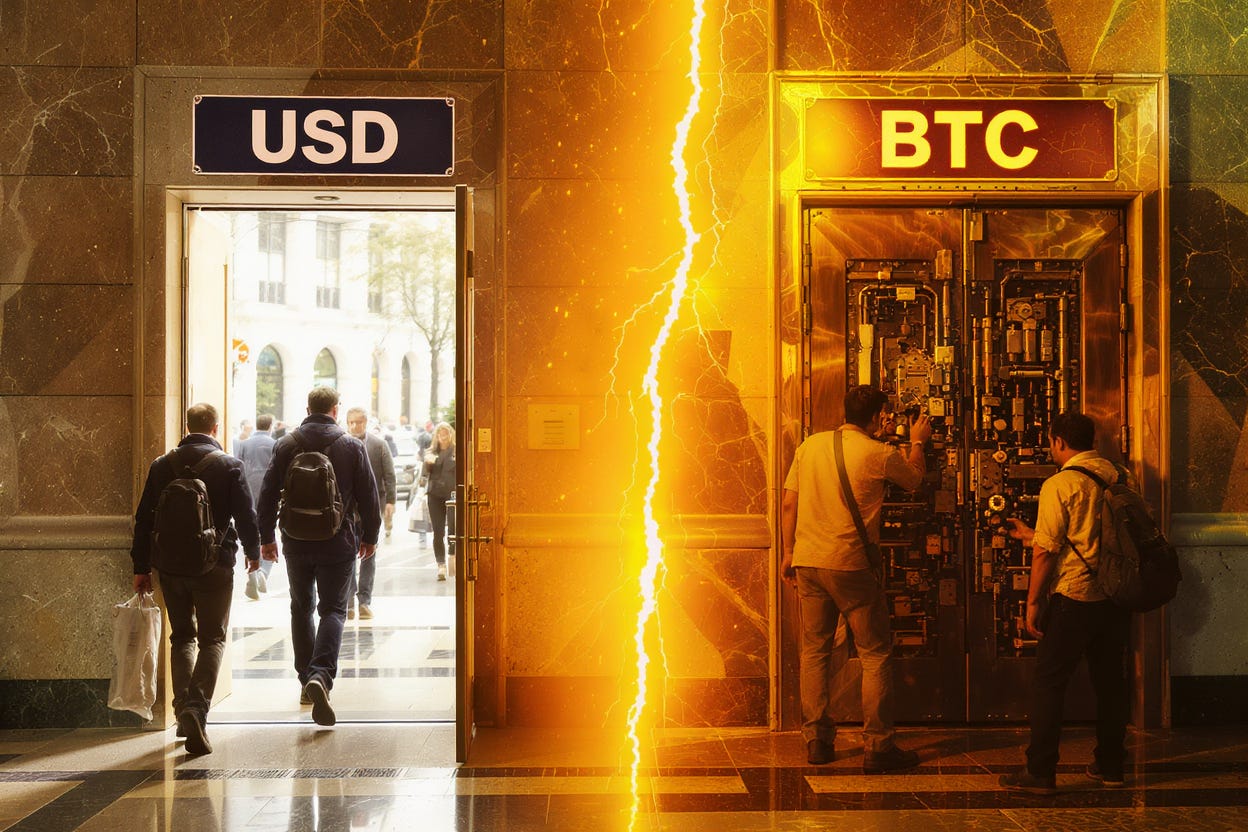
El Salvador's three-year experiment provides the clearest real-world data on maximalist predictions. The results split perfectly down the middle.
7 Things Bitcoin Maximalists Got Spectacularly Wrong
1. Lightning Network Would Make Payments Instant
I waited 60 minutes in that hotel lobby because Lightning Network wasn't widely available in the US. It was too slow to be useful. El Salvador supposedly built their entire economy on Lightning, yet remittances via crypto wallets fell to just 0.87% of total inflows by December 2024.1
The math is brutal. Converting Bitcoin to cash at a Bitcoin ATM costs a 5% sale fee, plus network fees, plus travel costs. That nearly doubles traditional remittance fees.2
2. 91.9% of People Would Reject Bitcoin When Given the Choice
A January 2025 survey by Central American University found that 91.9% of Salvadorans didn't use Bitcoin for any transaction in 2024.3 This represents the lowest usage rate since the law passed in 2021.
I told people to spend Bitcoin and immediately replace it with more. That would be healthiest for the economy, I said. But since there were so few places to spend Bitcoin anyway, I never spent mine either. Turns out most people made the same choice I did.
3. 97.75% of Businesses Would Never Make a Bitcoin Sale
The Salvadoran Foundation for Economic and Social Development found that 97.75% of businesses had not made a single sale in Bitcoin by October 2022.4 A Chamber of Commerce survey found only 14% of businesses had ever conducted any Bitcoin transaction.5
The crypto company I worked for accepted Ethereum and stablecoins. They wouldn't touch Bitcoin. If your own industry won't use your product, what does that tell you?
4. Bitcoin Would Bank the Unbanked (Chivo Wallet Failed Completely)
El Salvador's government-backed Chivo wallet attracted users with $30 sign-up bonuses. Only 40% continued using it after spending their bonus. By early 2022, just 20% remained active.6
Active users declined through Q1 2024 to approximately 384,000.7 The government is now committed to privatizing Chivo and ending public funding by July 2025.8
Hackers leaked the wallet's source code along with personal data of 5.1 million citizens in 2024.9 Traditional banking suddenly looked pretty good.
5. Hyperbitcoinization Was Never Going to Happen
Maximalists believed people would naturally abandon dollars for Bitcoin. El Salvador forced the choice. People overwhelmingly chose dollars.
Bitcoin remained technically legal tender, but El Salvador's Legislative Assembly made acceptance voluntary in January 2025 with 55 votes in favor.10 Tax payments now only accept US dollars.11
The useful illusion of stable money beat the hard truth of mathematical scarcity. People like their financial illusions inflatable.
6. Bitcoin Would Free Countries from Traditional Finance (El Salvador Crawled Back to the IMF)
El Salvador's Bitcoin experiment triggered alarm at the IMF and credit rating agencies. Sovereign bond yields soared. The country was locked out of international capital markets.
By December 2024, El Salvador secured a $1.4 billion Extended Fund Facility with the IMF.12 The conditions were explicit: make Bitcoin acceptance voluntary, unwind public sector participation in Chivo, and confine government Bitcoin purchases.13
The IMF's financial leverage proved stronger than crypto ideology. Sometimes you need the ability to print money during crises.
7. Mass Adoption Would Happen Naturally (It Required $120 Million in Bribes)
The government spent $120 million on Chivo wallet sign-up bonuses.14 Even artificial incentives couldn't sustain adoption. Most users abandoned the app after spending their free money.
Natural adoption never materialized. The total implementation cost reached $400 million, including $150 million for conversion backing.15
7 Things Bitcoin Maximalists Accidentally Got Right
1. Bitcoin Works as Digital Gold ($333 Million Treasury Gains)
El Salvador holds approximately 6,200 Bitcoin worth over $600 million at peak valuations.16 The portfolio generated unrealized gains exceeding $333 million.17 A Ministry of Finance report recognized $212 million in exchange rate differentials.18
I use Bitcoin like a bank account. I'd rather store money in Bitcoin than dollars in a bank. The treasury thesis works even when the currency thesis fails.
2. Fiat Systems Are Fragile (Fed's Impossible Dual Mandate)
Fed Chair Jerome Powell admitted in June that price stability and employment goals could become mutually exclusive.19 This validates the maximalist argument about fiat system contradictions.
Core inflation stays above 2% despite highest interest rates in decades. The Fed quietly slashed Treasury runoff by 80% while claiming to fight inflation.20 They can't normalize without breaking something.
3. Governments Will Debase Currency (IMF Forced Fiscal Discipline)
El Salvador's crisis forced a return to orthodox fiscal policy under IMF supervision. The agreement required fiscal consolidation, enhanced transparency, and risk containment.
Sovereign bond spreads collapsed over 3,100 basis points from 2022 peaks.21 Fitch and Moody's upgraded credit ratings in late 2024 and early 2025, explicitly citing the IMF program.22
The maximalists were right about debasement risks. They were wrong about Bitcoin fixing them automatically.
4. Traditional Finance Will Resist Bitcoin (But Bitcoin Survived)
The IMF forced policy rollbacks and contained crypto risks. Yet El Salvador still holds 6,200+ Bitcoin despite institutional pressure.
Credit rating agencies punished the crypto experiment and rewarded fiscal orthodoxy. But Bitcoin didn't disappear. It adapted.
5. Bitcoin Is Antifragile (Stronger After Government Attacks)
El Salvador's government made Bitcoin acceptance mandatory, then voluntary, then limited. Bitcoin survived every policy change.
The network operates without successful attacks or downtime for over 15 years. Government mandates couldn't kill it. Government restrictions can't kill it either.
6. Store of Value Thesis Works (Even When Currency Fails)
Bitcoin's price appreciation vindicated the digital gold thesis. My hotel experience proved payments don't work. But holding Bitcoin for savings does work.
The maximalists got the use case backwards. Bitcoin isn't better money for spending. It's better money for saving.
7. Mathematical Scarcity Beats Political Promises (Just Not as Currency)
People prefer dollars for transactions because dollars are stable and convenient. But Bitcoin's fixed supply creates real value over time.
El Salvador's tourism grew 22% in 2024, reaching 3.9 million visitors.23 The “Bitcoin Country” brand attracts niche enthusiasts even when locals reject Bitcoin payments.
The Real Lesson
I don't talk about Bitcoin anymore. I've planted all the seeds. Now I explore it as a dry financial instrument.
If someone asked me today whether they should put savings in Bitcoin instead of a bank account, I'd tell them to use a bank account. If they don't have enough conviction to find that answer themselves, Bitcoin isn't right for them.
The 2008 financial crisis taught me that government bailouts prevented a much darker outcome. The world needed that inflatable money illusion. But since I've seen inside the matrix, I don't want my money inflated.
Bitcoin maximalists were half right about everything. Fiat systems are fragile. Governments debase currency. Mathematical scarcity has value. Traditional finance resists change.
They were completely wrong about the other half. People like convenient money. Businesses want stable cash flow. Countries need financial flexibility during crises. Mass adoption requires actual utility.
El Salvador accidentally proved both sides. Bitcoin failed as currency and succeeded as treasury asset. The maximalist dream died. The digital gold thesis survived.
Bitcoin is strong enough as it is. It doesn't need to be perfect money. It just needs to be better savings.