

I Had the Wrong Number
The pass rate told me the proposal was uncontested. The proxy breakdown told me what the proposal was for.

Process note — analytical backstage for You Own the Hotspot. Nova Labs Owns What It Earns.

I had been quoting one number from the Helium piece for a week before it went out. It was the wrong one to lead with.
The number was 90.53%. That is the share of votes cast in favor of HIP-143, the April 2025 proposal that gave Nova Labs the authority to set Helium Mobile’s carrier pricing. 90.53% reads as consensus. The proposal passed roughly nine-to-one.
Then I sat down with the vote screenshot. Two proxy labels stacked toward the top: Nova Labs at 26.00%, ferebee at 24.00%. I had to add them in my head; the platform shows each proxy as a separate line item.
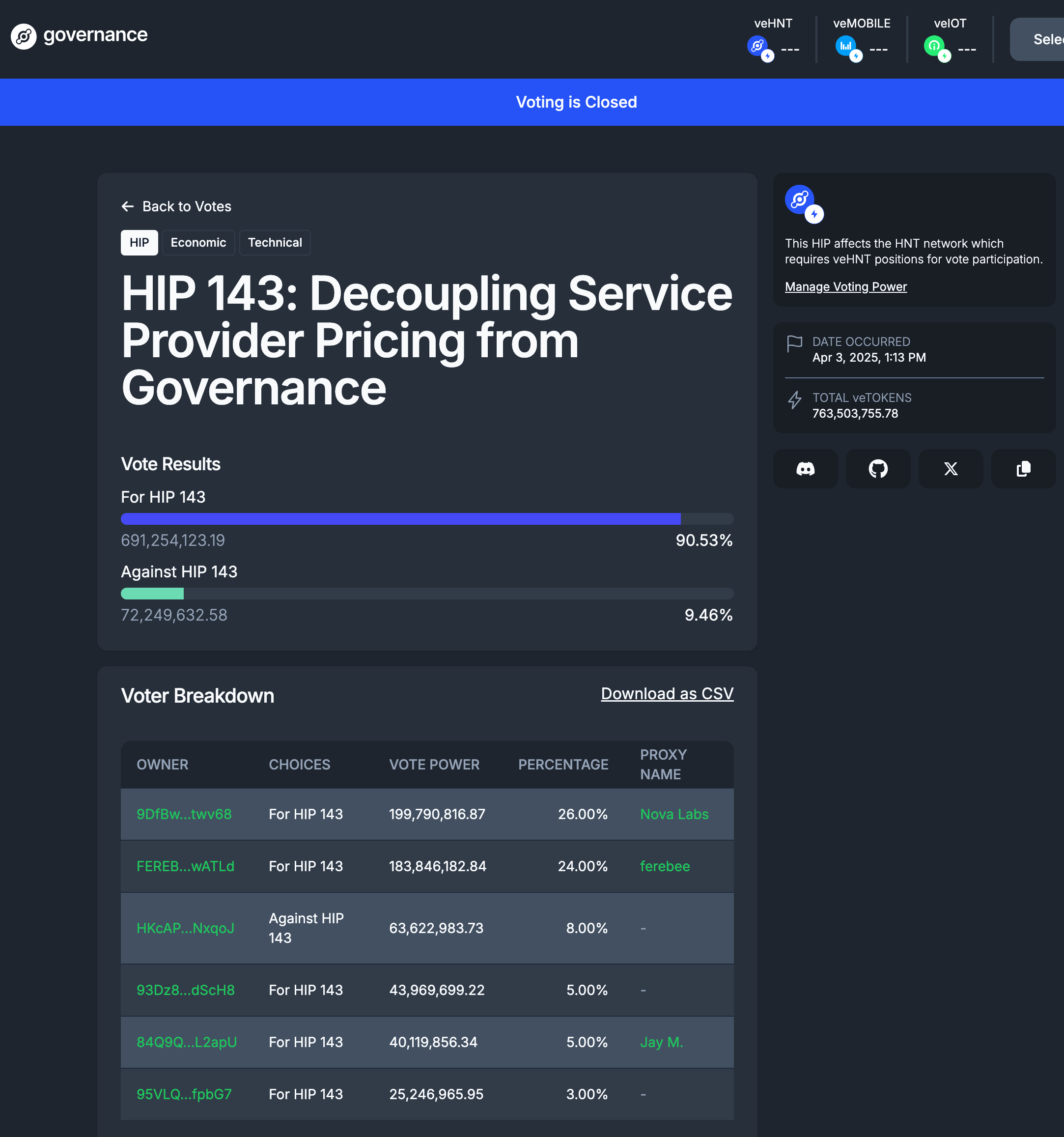
Half the yes votes came from Nova Labs and one of the four named co-authors. The proposal they were voting on gave Nova Labs that pricing authority.
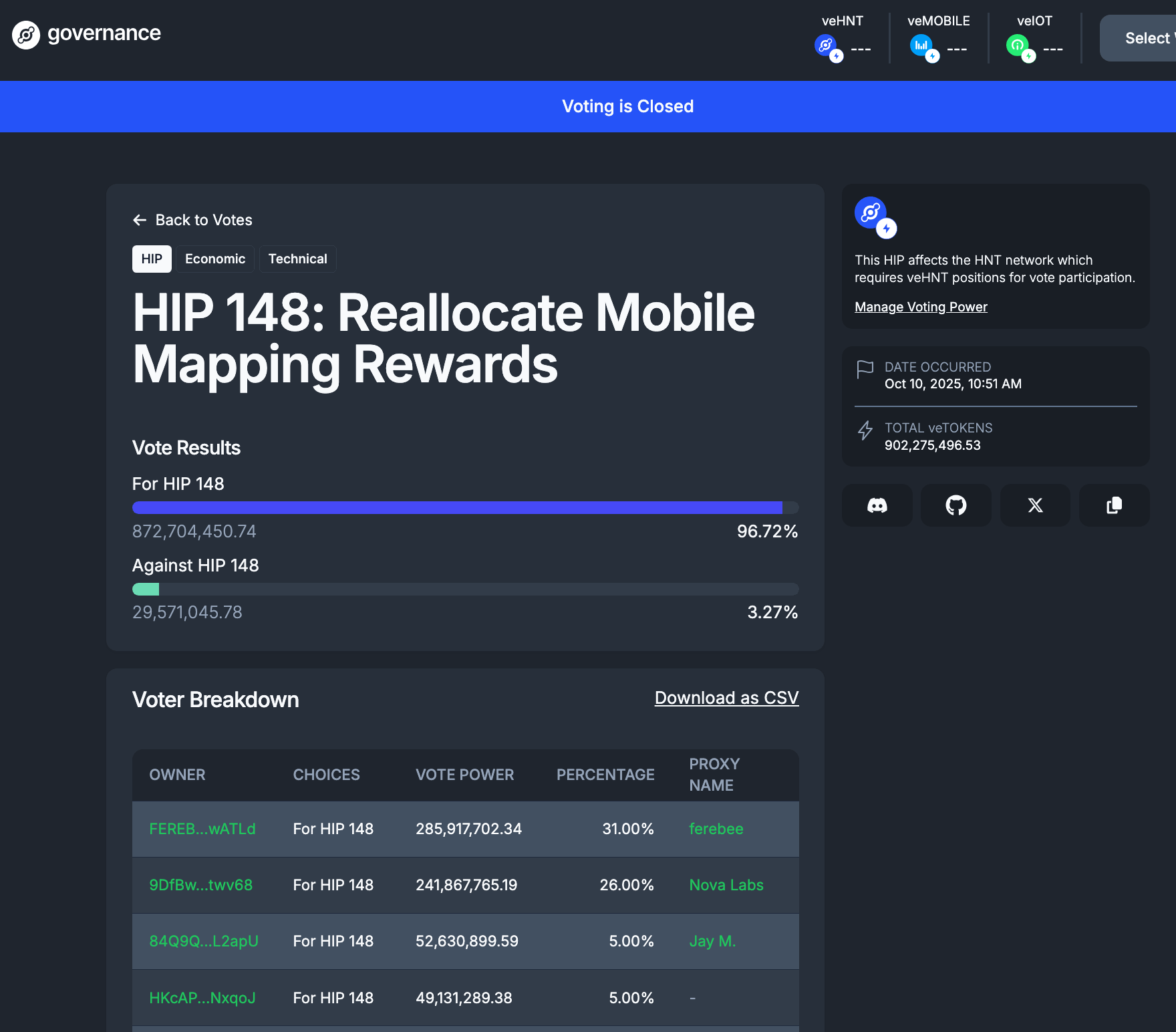
I ran the same split on HIP-148, the October 2025 vote that consolidated 24% of Mobile network emissions to Nova Labs. ferebee 31.00%, Nova Labs 26.00%. Combined: 57% of the total vote, on a proposal Nova Labs again co-authored. Six months between the two votes, and proposer-side concentration moved up seven points.
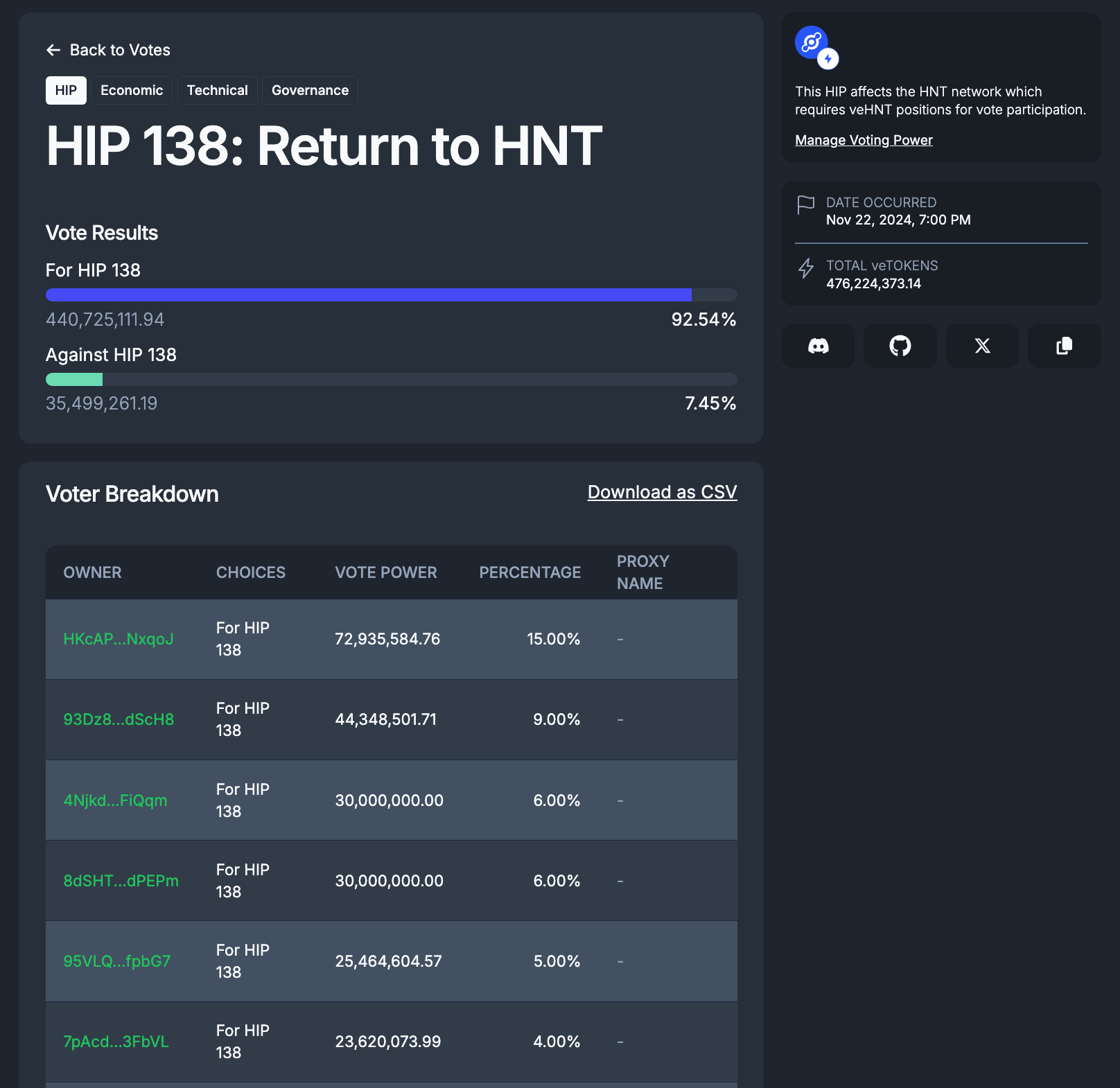
HIP-138 in November 2024 was the snapshot before that: top single voter was an anonymous wallet at 15%, with no labeled proxies in the top twelve. ferebee was a co-author on that one too. The architecture has a trajectory: 15, 26, 31. Each future HIP starts from a more concentrated baseline than the last.
Token-governance votes report a percentage. The percentage tells you whether the proposal was contested. An uncontested vote is different from a 51/49 fight.
The percentage is silent on who the proposal was for. For that, you have to add the proxies yourself. You match the named co-authors in the HIP markdown against the proxy labels in the vote screenshot. The platforms do not do this for you.
The published piece carries both numbers: the 90.53% pass rate and the 50% top-two concentration. Most readers will remember the 50%.
The 90% is the floor. It tells you the vote was procedurally clean. The 50% is the room. It tells you who built it.
When the private analysis produces a different number than the published one, the paid note carries both.
Paid-tier subscribers get this in every issue: the analytical moves behind the piece, including the ones that didn’t survive contact with the primary sources. This week is a freebie for all subscribers.