

The Autism Advantage
Why Neurodivergent People Will Dominate the DePIN Economy

The Spark: Labor Day 2025, or How I Learned to Stop Worrying and Love the Economic Collapse
Happy Labor Day 2025, everyone! Time to fire up the grill and celebrate the noble tradition of exchanging our finite existence for corporate theater tickets. While you’re flipping burgers and pretending your job has meaning, I’ll be over here having a revelation: this might be the last Labor Day that actually celebrates labor.
Not because robots are taking over (though they are), and not because capitalism is dying (though it is having some concerning chest pains). No, this Labor Day feels different because I finally figured out why I’ve been such a spectacular failure at traditional employment, and why that failure might actually be a preview of economic evolution.
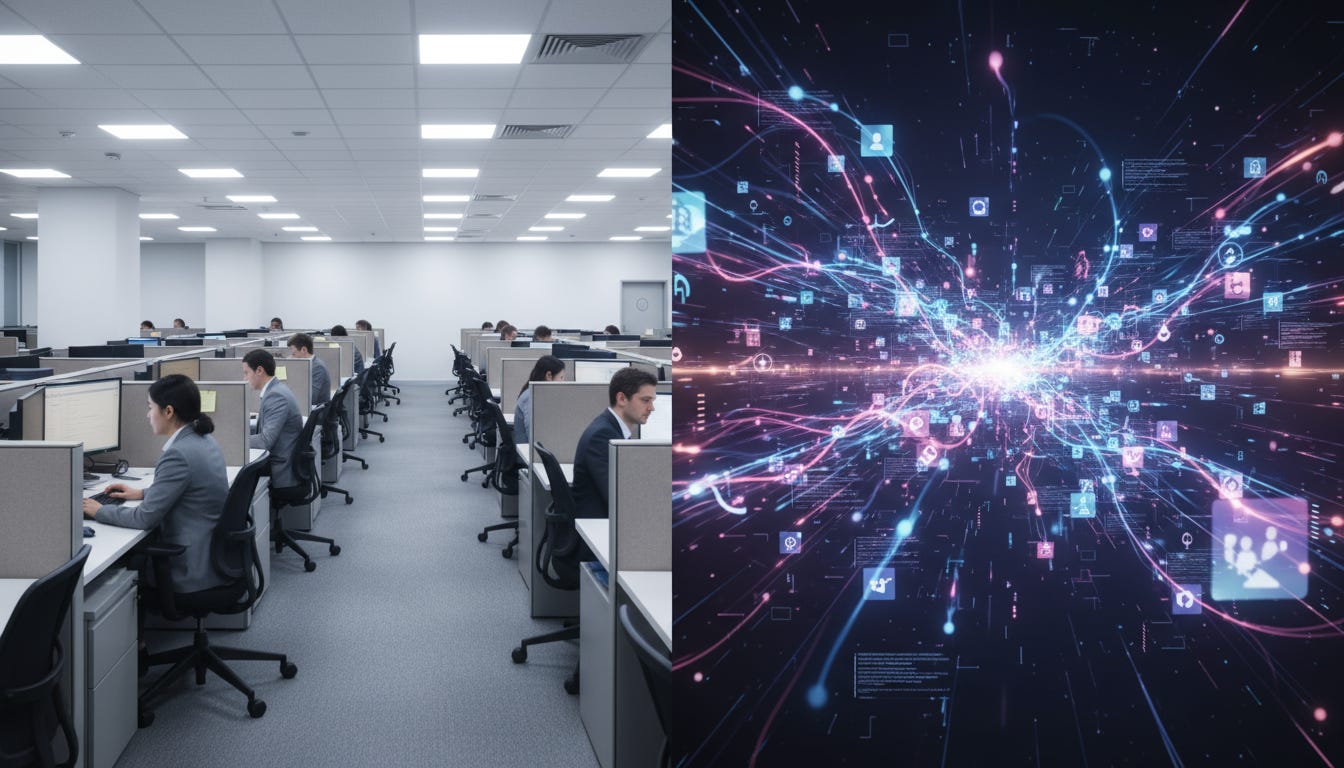
You see, I spent most of my career being the canary in the coal mine of workplace dysfunction. While everyone else was happily performing productivity theater, I kept having these inconvenient episodes where I’d actually try to solve problems. Real problems. The kind that required building mental models of entire systems instead of just following the approved PowerPoint deck.
Turns out, this made me unemployable in the traditional sense. I couldn’t fake enthusiasm for meetings that could have been emails. I couldn’t pretend that “best practices” were substitutes for understanding why those practices worked. And I definitely couldn’t master the advanced corporate skill of looking busy while contributing nothing.
What I didn’t realize until recently is that I wasn’t failing at work. I was beta-testing the future economy.
The traditional employment model rewards performance over substance, theater over results. It’s a system designed for neurotypical brains that can genuinely convince themselves that busy work matters. But that system is about to meet its match in the form of decentralized networks that literally cannot be fooled by elaborate productivity cosplay.
Welcome to the autism advantage.
The Pattern: How Traditional Workplaces Accidentally Selected Against Intelligence
Let me tell you about the most valuable thing I ever built that nobody cared about.
Early in my career, I worked for a promotion agency where prize codes were essentially digital cash. These codes were being tracked in a text document. Not a spreadsheet. Not a database. A text document. It was like watching someone store their life savings in a shoebox under their mattress, except the shoebox was on fire and the mattress was made of nitroglycerine.
So I did what any reasonable person would do: I reverse-engineered the entire prize code ecosystem. I built a database, created software tools for management, implemented security protocols, set up encryption for code delivery, designed redundant backup systems. I turned their digital shoebox into Fort Knox with a user-friendly interface.
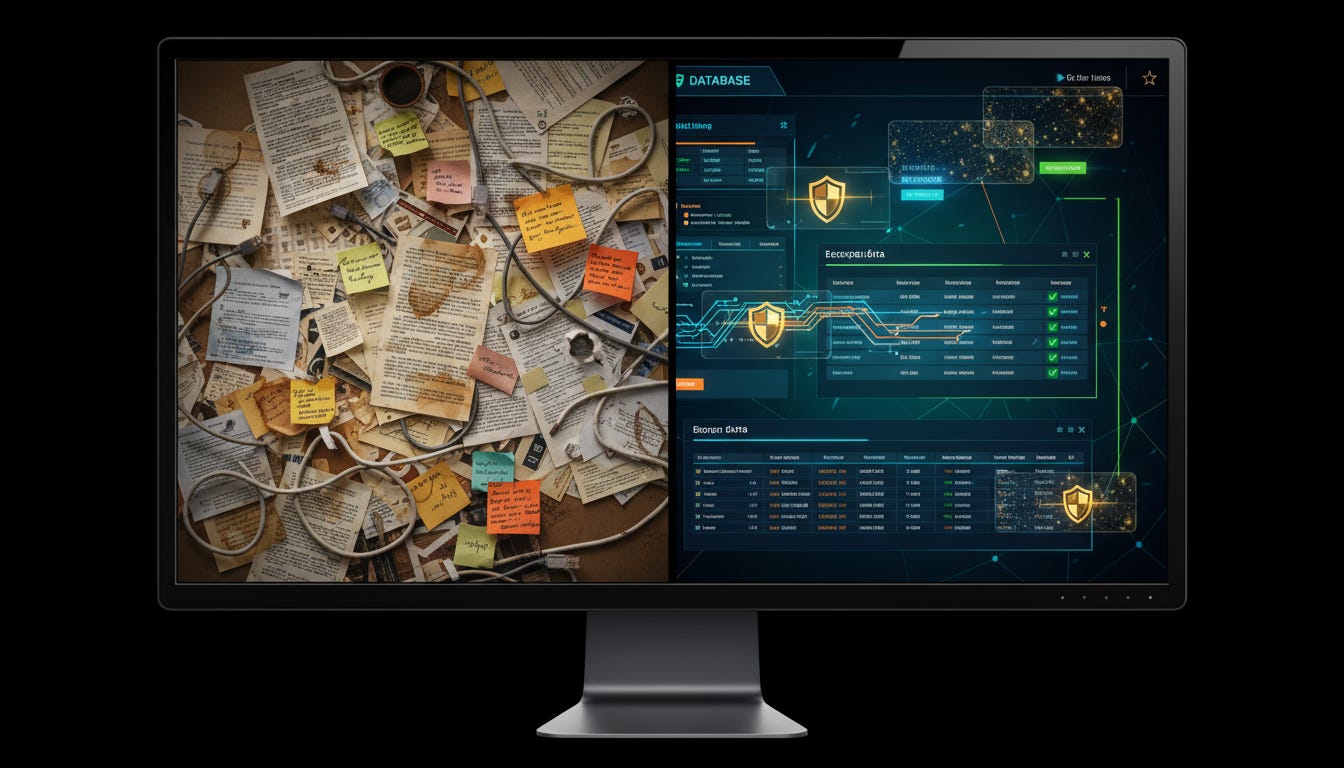
Did I get promoted? Not exactly. Did the person who was really good at explaining why we needed “synergy optimization” get promoted? Absolutely.
This is the fundamental absurdity of traditional employment: it systematically punishes the kind of deep-systems thinking that actually creates value while rewarding elaborate presentations about value creation. It’s like giving acting awards for the most convincing performance of being a doctor while letting the actual doctors work the night shift.
The problem isn’t that neurotypical people are stupid. The problem is that traditional workplaces have evolved to reward cognitive patterns that optimize for social performance rather than problem-solving. They’ve created elaborate selection pressures that favor people who can brainwash themselves into thinking that following procedures without understanding them is the same thing as being smart.
But here’s where it gets interesting: those same workplaces are now drowning in complexity that their performance-optimized systems can’t handle. They’re discovering that “best practices” only work when you understand the underlying models they’re based on. They’re learning that you can’t fake your way through systems that require actual intelligence.
The canaries have been dying for years. The mine is finally exploding.
Most organizations use best practices as intellectual training wheels, except they never take the wheels off. They treat these practices like magic spells rather than conclusions you should reach after doing the deep investigative work yourself. It’s the difference between memorizing math formulas and understanding mathematics.
When you’re wired to reverse-engineer problems until you can build accurate mental models of how systems actually work, watching people follow procedures they don’t understand feels like watching adults use finger-painting techniques to perform brain surgery. It would be funny if it wasn’t responsible for so much of our economic dysfunction.
The neurotypical advantage in traditional workplaces wasn’t superior intelligence. It was superior tolerance for cognitive dissonance. But that advantage is about to become a liability.
The Protocol: Welcome to Autistic Economics
Decentralized Physical Infrastructure Networks (DePIN) represent something unprecedented: economic systems that literally cannot be fooled by performance theater.
In traditional employment, you can spend years optimizing for the appearance of productivity while contributing nothing meaningful. You can master the art of looking busy, sounding important, and taking credit for other people’s work. The system will reward you with promotions, raises, and corner offices.
In DePIN, the network itself is your boss, and the network is autistic as hell.
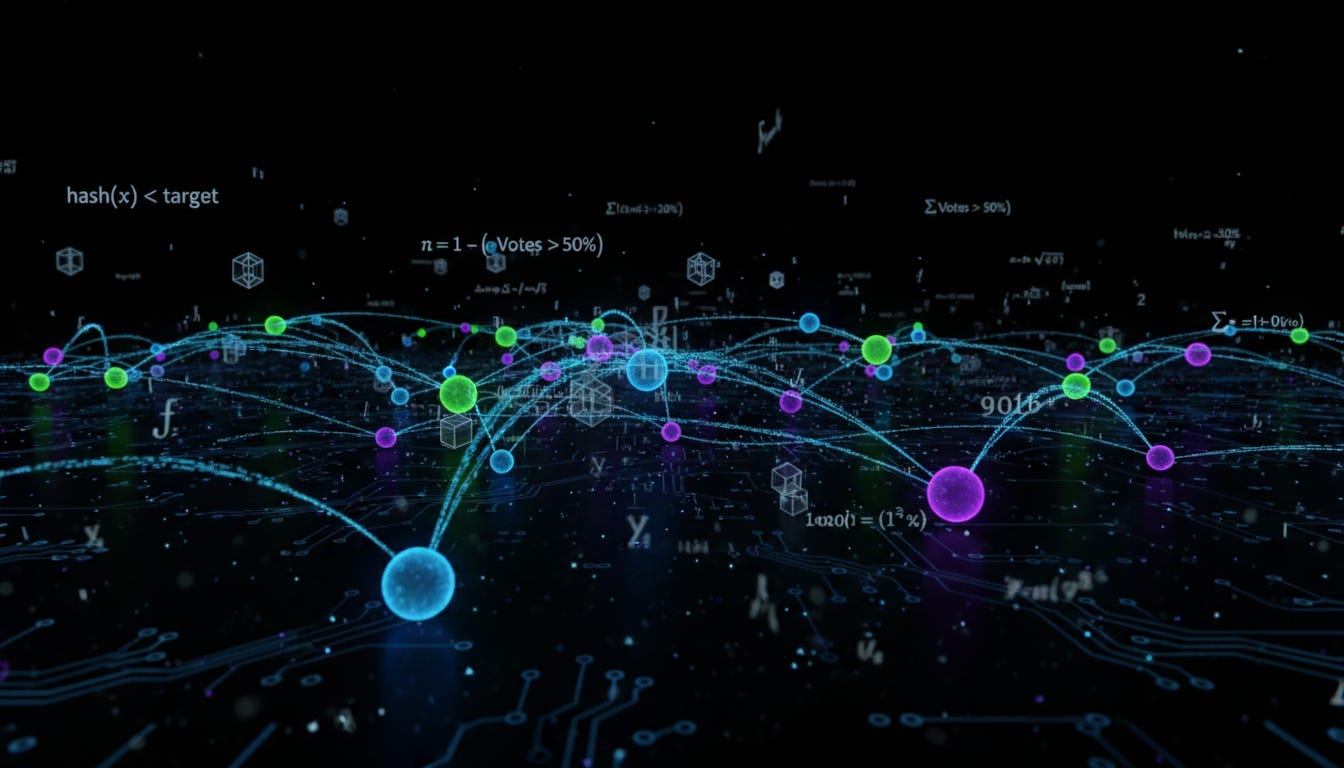
DePIN protocols don’t care about your presentation skills. They don’t care if you’re good at meetings. They don’t care if you can explain synergy optimization or leverage core competencies to maximize stakeholder value. They care about one thing: are you actually contributing measurable value to the network?
If you run a Helium hotspot, the network measures your actual radio coverage, not your ability to write quarterly reports about radio coverage.1 If you provide storage through Filecoin, the network verifies your actual storage capacity and reliability, not your PowerPoint slides about storage solutions.2 If you contribute computing power through render networks, the system measures your actual computational output, not your enthusiasm during team building exercises.
This is economic natural selection designed for minds that think in systems rather than stories. It rewards the obsessive deep-diving that neurotypical managers see as “not being a team player.” It values pattern recognition over people skills. It compensates for actual problem-solving rather than problem-solving theater.3
The reason neurodivergent people are naturally suited for DePIN isn’t because we’re better at technology (though we often are). It’s because we’re already optimized for merit-based systems. We’ve been reverse-engineering complex problems our entire lives. We’ve been building mental models while everyone else was building PowerPoint decks.
DePIN protocols operate like autistic economics: pure incentive alignment without social performance requirements. The network doesn’t care if you’re awkward in meetings because there are no meetings. It doesn’t care if you struggle with small talk because small talk doesn’t contribute to network security. It doesn’t care if you have trouble reading social cues because the only cues that matter are mathematical.
For the first time in human history, we have economic systems that reward intelligence the way intelligence actually works, rather than the way traditional workplaces think it should work.
Personal Code: The Future Belongs to Pattern Recognizers
I used to think I was broken because I couldn’t convince myself that meaningless work was meaningful. I’d burn myself out trying to optimize systems that didn't deserve optimization, spending enormous mental energy on tasks that any reasonable analysis would reveal were wastes of time.
The turning point came during my recent recovery from burnout, when I realized that I wasn’t being lazy when I chose not to do things. I was preserving cognitive resources for maximum impact. I was operating like a properly calibrated system rather than a people-pleasing performance engine.
This shift in perspective revealed something profound: we’re entering an era where everyone is going to have to think more like neurodivergent people.
The traditional economy was built for a world of predictable, repetitive tasks that could be optimized through standardization. That world is disappearing. The new economy is built around managing complexity, recognizing patterns in chaotic systems, and building robust models that can handle unprecedented scenarios.
These aren’t neurotypical skills. These are autistic skills.
While traditional workers were perfecting their ability to perform productivity, neurodivergent people were developing the cognitive tools that the future economy actually needs. We were learning to think in networks instead of hierarchies. We were building pattern recognition systems instead of social performance systems. We were developing tolerance for complexity instead of tolerance for bullshit.
The great irony is that all those years of being “difficult employees” were actually years of developing the exact cognitive abilities that DePIN and other emerging economic models require. We weren’t failing at work. We were inadvertently training for the jobs that didn’t exist yet.
The future doesn’t belong to people who can fake their way through meetings. It belongs to people who can build accurate models of complex systems. It doesn’t belong to people who can manage up. It belongs to people who can manage complexity.
It belongs to the pattern recognizers.
So this Labor Day, while everyone else is celebrating the noble tradition of trading their finite existence for the illusion of security, I’ll be celebrating something different: the quiet revolution of economic systems finally catching up to how intelligence actually works.
The neurotypical world spent decades trying to fix us. Turns out, we were the solution the whole time.
What patterns are you recognizing in your own work that everyone else seems to be missing? And more importantly, are you ready to stop performing productivity and start building the future?