

When Democracy Comes With a Strategem Code
Finding Freedom in Fascism Simulator 2025

The Spark: How I Discovered Joy Through a Bullet Engraving
Charlie Kirk died with video game codes carved into the unspent bullets left behind by his killer.
Tyler Robinson walked up to a Turning Point USA event in September 2025, fired shots engraved with Helldivers 2 Strategem sequences, and somehow this act of political violence led me to the most fun I’ve had in months. Reddit identified the engravings before most news outlets even knew what a Strategem was. Someone posted gameplay clips in the investigation threads. I watched armored soldiers dropping from orbit, explosions blooming across alien terrain, a robotic voice announcing mission parameters with all the enthusiasm of a DMV automated phone system.
My immediate thought: “That game looks awesome.”
Tried it. Confirmed awesome.

This is how discovery works now. Assassination generates memetic debris, algorithms surface culturally relevant fragments, and suddenly you’re learning about video games through forensic analysis of ammunition. The simulation doesn’t just bleed through anymore. It hemorrhages.
Nobody tells you about the guilt timeline when you find entertainment through tragedy’s footnotes. Mine lasted approximately thirty seconds before my brain recognized that dopamine deficiency poses a more immediate threat than the performance of appropriate solemnity. Robinson’s motivations remain his own, tangled mess of ideology and grievance. Kirk’s death registers as one more data point in our ongoing national psychosis. But my nervous system needed an escape hatch from the relentless grind of web3 capitalism, and the universe delivered via the most absurdly indirect route available.
Helldivers 2 operates as satire so perfectly calibrated to this moment that playing it in late 2025 feels less like entertainment and more like participatory documentary. You play as a soldier in “Super Earth’s” military, spreading “managed democracy” across the galaxy by shooting bugs and robots while propaganda blares through your helmet speakers. The game glorifies authoritarian aesthetics while mocking authoritarian logic so thoroughly that you’re laughing even as you’re genuinely stressed about completing mission objectives.
Timing couldn’t be better. Or worse. Depends on your tolerance for cognitive dissonance and whether you think satire matters when reality has lapped it twice.
The Pattern: Games as Emotional Regulation for Distributed Processors
My brain refuses to process linearly, and Helldivers 2 doesn’t ask it to.
I’ve written about octopus intelligence as a metaphor for distributed cognition, but the practical reality lands simpler: I need structured chaos to function. Not randomness. Not rigid order. Something occupying the territory between those poles, where clear objectives exist within unpredictable environments and success requires adaptive problem-solving rather than rote execution.
Helldivers delivers exactly this architecture.
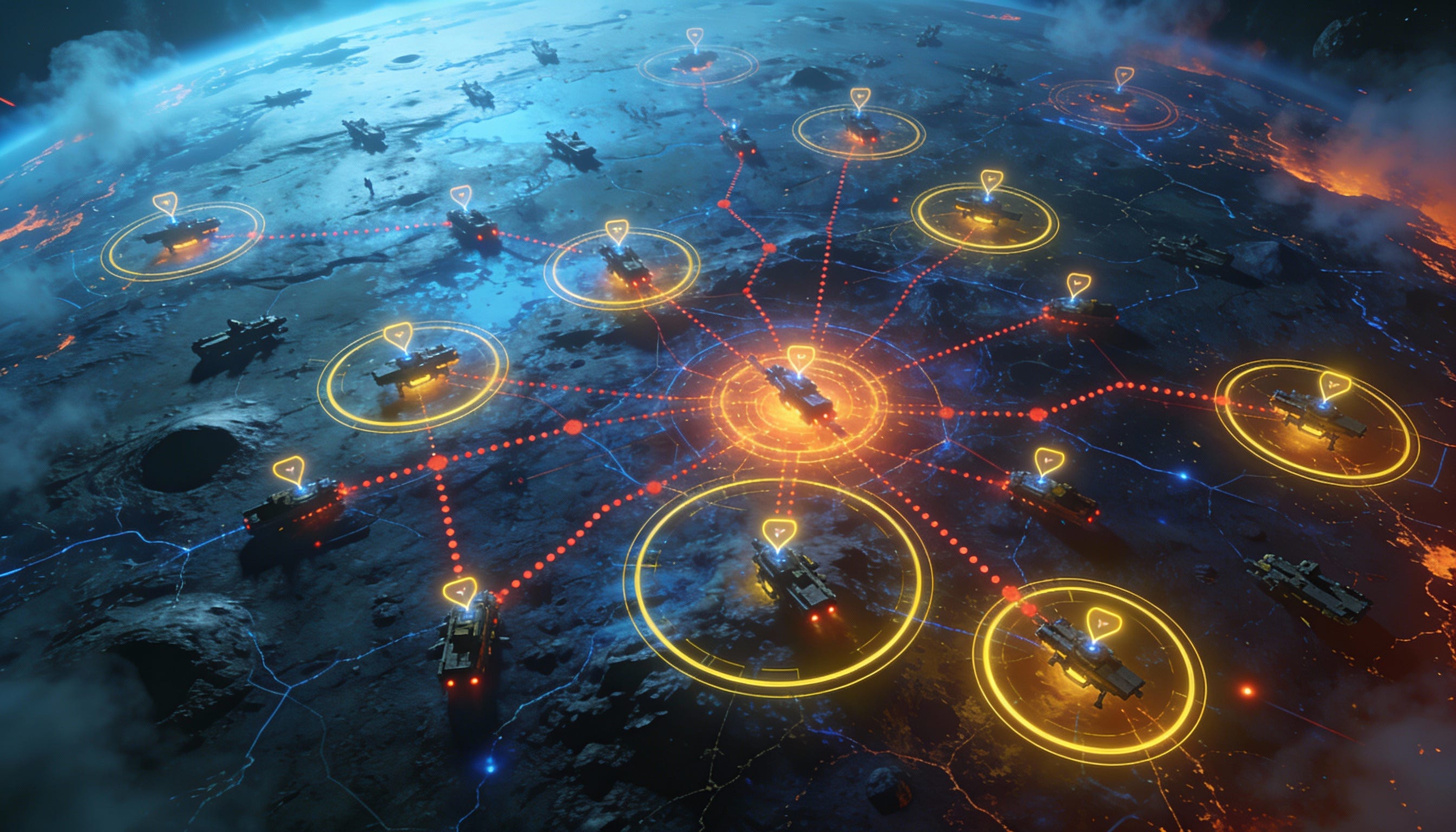
Each mission drops you onto a hostile planet with specific goals: destroy bug nests, activate terminals, extract data, eliminate high-value targets. Missions last between fifteen and forty minutes, mapping perfectly to my attention span’s natural rhythm. Short enough to complete without mental fatigue. Long enough to achieve meaningful progress. Chaos emerges from environmental hazards, enemy spawn patterns, friendly fire mechanics (yes, you can accidentally orbital strike your teammates), and the perpetual tension between aggressive advancement and tactical retreat.
This is where the game transcends distraction and becomes mirror.
Games have always served as emotional regulation tools, but different games regulate different emotions and nervous systems. Competitive multiplayer experiences like League of Legends or Call of Duty PvP modes trigger my stress response without offering sufficient reward. Social dynamics feel threatening rather than collaborative. Every mistake becomes a referendum on competence. Every loss suggests inadequacy rather than simple probability.
Player versus Environment (PvE) structures bypass this entirely. Helldivers offers a common enemy. Bugs don’t judge your loadout choices. Robots don’t flame you in chat for missing your Strategem input. Other players theoretically fight on your side, united against alien threats rather than competing for ranked superiority. This removes competitive anxiety while preserving cognitive engagement.
But here’s where my neurodivergence shows up clearly: I play solo most of the time.
Social coordination required for effective squad play still feels unnatural. I’m practicing the controller-activated team signals because I can’t manage keyboard chat while using the controller. Both activities require both hands. Switching costs prove prohibitive. So I mostly fight alone, occasionally joining random squads when I feel up for the additional cognitive load of cooperative play.
This isn’t antisocial behavior. This is calibration.
My distributed processing style handles mission chaos brilliantly. I track multiple threats, manage ammunition and cooldowns, adjust tactics based on terrain and enemy composition, all while navigating toward objectives and avoiding environmental hazards. This feels natural, like breathing or blinking. What doesn’t feel natural yet is integrating another person’s decision-making process into my own real-time calculations.
I want to find consistent squad members. Players whose patterns I can learn, whose communication style matches mine, whose tolerance for chaos aligns with my threshold. Until then, solo operations work fine. The game supports both approaches without penalty, which registers as rare and valuable in an industry that increasingly forces social engagement as mandatory content.
The Protocol: What “Managed Democracy” Teaches About Institutional Theater
Super Earth’s propaganda machine would make Goebbels blush with envy.
The game’s satire lands differently now than it would have landed a year ago. Super Earth’s government broadcasts messages about liberty and freedom while conscripting citizens into endless war. Mission briefings describe alien species as existential threats requiring extermination while casually mentioning resource extraction operations. In-game propaganda celebrates individual sacrifice for collective glory using language lifted directly from any authoritarian regime in human history.
Playing this during Trump’s second term adds layers of uncomfortable resonance that the developers probably didn’t intend but definitely earned.

One recent mission involved liberating a detention center called CECOD. The name references CECOT, El Salvador’s massive mega-prison for gang members. The game doesn’t explain this. It just places you in a militarized facility where you shoot aliens while robotic voices celebrate your contribution to justice and security. Satire doesn’t announce itself. It just exists, waiting for players to recognize the pattern.
This connects directly to my writing about institutional dysfunction and corporate theater. I’ve spent months analyzing how DePIN projects claim decentralization while maintaining centralized control structures. How Federal Reserve policy gets framed as economic management while serving extraction functions. How political language performs accountability without delivering consequences.
Helldivers 2 does this with aliens and robots, but the mechanics prove identical.
The game presents a system claiming moral authority (democracy, freedom, liberty) while operating through authoritarian structures (mandatory service, state violence, propaganda saturation). It makes you complicit in the system by making gameplay genuinely fun. Nobody forces you to spread managed democracy. You choose to, because shooting bugs with orbital lasers feels satisfying and the mission structure provides clear objectives in an otherwise chaotic universe.
This is how propaganda works. Not through force, but through making participation feel like agency.
The game lets you see this clearly because it’s satire. Satire admits its construction. But pattern recognition doesn’t stop at the game boundary. Once you start noticing how systems perform legitimacy while operating through control, you see it everywhere. Corporate diversity statements. Political reform promises. Decentralization narratives from venture-backed blockchain projects claiming to disrupt while reproducing the exact power structures they supposedly oppose.
Helldivers admits it’s fiction. Real institutions insist their performance is substance. That’s the only meaningful difference.
My Debug: The Irony of Finding Freedom in a Fascism Simulator
Web3 capitalism was killing me slowly, so I started playing a game about killing bugs for a fascist government.
I needed escape into alternative reality because work operates at maximum velocity with minimum reflection, constantly demanding attention and reaction to market movements that may or may not be organic. Every project claims revolutionary status. Most deliver corporate theater with blockchain aesthetics. The cognitive load accumulates until your nervous system starts filing formal complaints.
The game offered something genuinely different: structure without stakes.
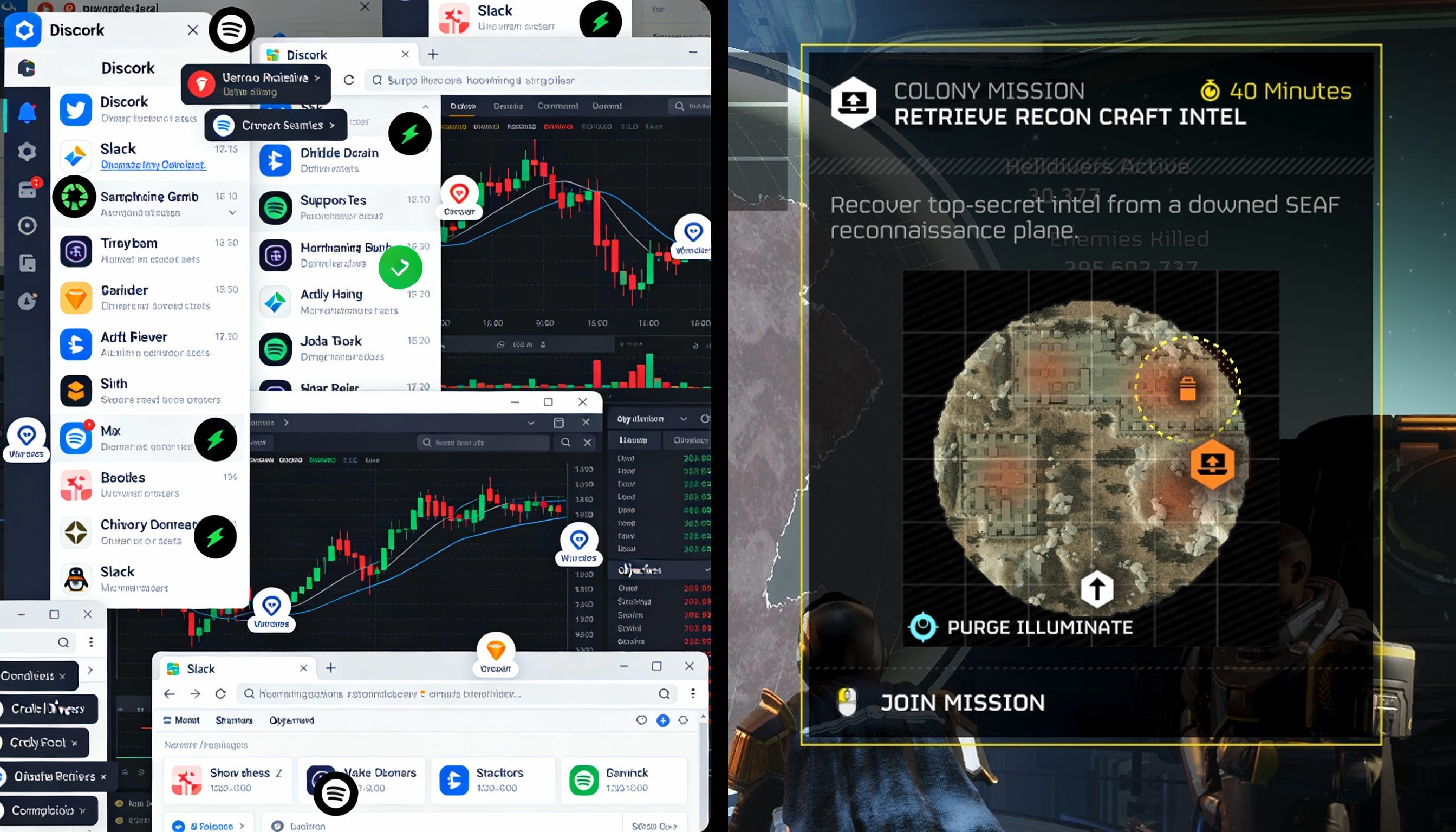
Missions have clear objectives. Success and failure register as unambiguous. Time investment stays bounded. Nobody’s financial future depends on whether I successfully extract the data or die to a bug patrol. Consequences exist entirely within the game space, which means I can experience stress and relief without the weight of real-world implications.
This is what healthy escape looks like.
But the deeper irony proves harder to ignore. I’m finding freedom and agency in a game satirizing authoritarian control while rebuilding my actual autonomy after years of chaos and collapse. The game’s “fail forward” design mirrors my entire recovery narrative. You die constantly in Helldivers. Missions fail. Squads get wiped. But you keep dropping back in, trying again, learning patterns, adapting strategies until eventually you succeed.
This is the only model that works for complex recovery. Not linear progress. Not avoiding failure. Just persistent iteration with clear feedback loops and bounded consequences.
Immersion sometimes gets intense enough that I need to mentally prepare before playing. Mission chaos triggers my actual stress response. Heart rate increases. Focus narrows. Distributed processing kicks into high gear as I track threats, manage resources, coordinate movement. This is my nervous system doing what it does naturally, but the intensity reminds me that even healthy engagement requires calibration.
When I start feeling actually stressed during missions, I know it’s time to stop playing. The game is supposed to relieve work stress, not replicate it. But the fact that it can trigger genuine physiological responses speaks to how effectively it creates immersive chaos. My brain doesn’t fully distinguish between game threats and real threats when processing in the moment. The octopus arms handle information from the game environment as seriously as they handle information from physical reality.
This isn’t a bug. This is proof that emotional regulation is working.
I’m rebuilding my capacity to engage with controlled chaos after spending years either drowning in uncontrolled chaos or avoiding challenge entirely. Helldivers offers a middle path: genuine difficulty with clear boundaries, real stress with reversible consequences, cooperative potential without mandatory social performance.
The lesson ‘Charlie Kirk died so I could discover healthy coping mechanisms’ ranks somewhere between inappropriate and grotesque on the moral clarity scale. But Tyler Robinson’s bullets carried Strategem codes into reality, and those codes led me to a game teaching me how to handle stress through structured engagement rather than avoidance or collapse. The connection exists whether I want it to or not. Absurdity has been the dominant frequency for years now. Might as well find joy in the static.
The best games don’t just entertain. They reveal. Helldivers 2 revealed that my brain craves structured chaos with bounded consequences. That satire can teach pattern recognition applicable far beyond the game space. That cooperative play requires calibration, not just willingness. That finding freedom sometimes means temporarily submitting to a fascism simulator that admits what it is rather than pretending to be something else.
Real systems could learn from this. But they won’t, because admission destroys the performance. Propaganda requires believers. Satire just requires players willing to see the joke.
So I’ll keep dropping onto hostile planets, spreading managed democracy one orbital strike at a time, laughing at propaganda that’s only slightly more absurd than reality, finding relief in a game that makes authoritarianism so obvious that even my chaos-adapted brain can see the pattern clearly.
Democracy is non-negotiable. Especially the managed kind.
What systems are you participating in that perform freedom while delivering control? And have you found your own escape hatch, or are you still pretending the theater is real?
Sources: